by Simona Vilău
Internationally, 2013 was the year in which Victor Man was designated “The Artist of The Year 2014” by Deutsche Bank, and the Romanian Pavilion had an unprecedented success at the Venice Biennale. In Paris, Scènes Roumaines were displayed at the Louis Vuitton Foundation, a Romanian exhibition/selection, which presents itself as relevant but also exclusive given the current situation of contemporary art in Romania.
Geta Brătescu, Ștefan Bertalan and Andra Ursuța were selected for the thematic exhibition of the Venice Biennial, „Il Palazzo Encicopledico” curated by Massimiliano Gioni. Adrian Ghenie set a personal record sales at the Sotheby’s auction from February 12th, 2013 with the piece „Dr. Mengele 2”, while, the Romanian artists Diet Sayler and Romul Nuțiu got impressive results at Christie’s London, in the auction from the 24th of September 2013.
Socially speaking, the second half of the year was dominated by the protests of the civil society against the Roșia Montană Gold Corporation and the exploitation of schist gases at Pungești, Vaslui, by Chevron. The socially engaged artists or those concerned with ecology were among the protesters devoted body and soul to these causes, both through physical presence as well as through powerful messages on social networks. Dan Perjovschi was again the most fervent supporter of these voices and performed a memorable visual demonstration, through his drawings full of significance and bitter irony, which were circulated on the social media channels of all the supporters of a clean environment and transparent and democratic policies.
The two phenomena of contemporary society, the elegant and intellectualized trades, leaded to the highest level of the market, on one hand, and social activists on the other hand, have many unexpected common factors, just because they both want, at first glance, a harmonic, ideal, meritocratic world in which the value of truth prevails. The reasons and the fuel vary, which is why there are conflicts and dissonances between the two parties, which are often involved into a silent war.
Among the most active spaces in 2013 (and not only) in Bucharest, we can mention Platforma Space and Salonul de Proiecte, within Anexa MNAC. Erosion, after Continental Drift Theory, the latest solo-show of Ciprian Ciuclea was one of the flagship events at Platforma in 2013. Salonul de Proiecte hosted (at least) one memorable exhibition – Ioana Nemeș, Sometimes We Shouldn’t Pretend Everything Is OK, in memoriam benchmark for premature loss. Pavilion has hosted two representative events – Common Nostalgia, curated by Eugen Radescu and The Affluence of the Working Class
from Differentiation to Collectivism (About Fashion and the politics of the Aesthetics), curated by Răzvan Ion, exhibitions which challenged the paradigmatic issues inside and outside contemporary systems.
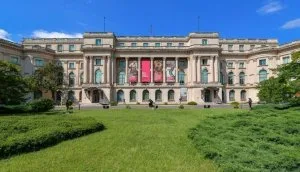
The National Museum of Contemporary Art has also hosted two flagship exhibitions for the current artistic scene – Q.E.D – Mircea Cantor, curated by Mihai Pop and Raluca Velisar, and Good Girls. Memory, Desire, Power, curated by Bojana Pejić and Olivia Nițiș. The first reflects the career of the most visible Romanian artist on the international scene and the second reflects the recurring and thorny issues of the patriarchal societies, which can often be found in our world.
Dan Beudean was one of the finalists of Strabag Art Award 2013, a prize offered to the young artists from Central and Eastern Europe, and Cătălin Petrișor and Carmen Dobre were among the finalists of Celeste Art Prize, a competition that was held in Rome in December 2013.
Alternative spaces were also on top in 2013, Gallery 26 hosted a number of fresh solo-shows, by artists like Adrian Popescu, George Roșu, Botond Reszegh, Iulia Nistor, Florin Pantilimon; Calup hosted a series of rising alternative artists, like Lea Rasovszky or Adrian Preda, and Ciclop Parking on Magheru Boulevard was the destination of Graffiti and Street Art for a while.
Among the events of private galleries, we can mention Dumitru Gorzo – With Love (Din Dragoste) at H’art Gallery, Zsolt Berszan – ABlackJECTION at Anaid Art Gallery, Anca Benera & Arnold Estefan – Compensation for the Lack of Resources, at Ivan Gallery, Belu-Simion Făinaru – 4 Broken Walls, at Anca Poterașu Gallery, Adriana Elian – Sentimental Stuff at 418 Contemporary Art Gallery, Dorin Crețu – Painting at Ann Art Gallery and many others. Calina Gallery from Timișoara hosted a series of dynamic exhibitions, organized by renowned curators, from which we mention Nomade au Sahara, Cristian Răduță, curated by Liviana Dan.
Another dynamic art space in Bucharest is Aiurart, where equally unique events took place, like Mutation – Dan Pierșinaru, The Royal House Ionescu, curator Erwin Kessler or the project of Ioana Ciocan, called Sculpture in plein air at Aiurart.
From the series of retrospective exhibitions, we have to mention The City Saw by the 80s Generation, curated by Adrian Guță at Victoria Art Center or Horea Paștina and Marin Gherasim at Sala Dalles.
In terms of art books, 2013 is marked by the appearance of the controversial and discussed volume X20. A Radiography of Romanian Art after 1989, written by Erwin Kessler and published by Vellant. The story continues in 2014.