by Ioana Popp, Photo: ARCUB
What strategic priorities will you pursue in your first year in office?
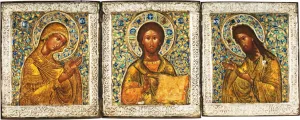
At the moment I have an interim mandate of a few months, and the strategic priority is the full five-year mandate. The priorities of this mandate are linked to modernity and modernization. On a conceptual level, MNAR will focus on the relationship between tradition and modernity, on emphasizing the elements of tradition specific to our modernity and on the fact that, our tradition, visually and intellectually codified in the second half of the 19th century, is a typical phenomenon of modernity. At the organizational and functional level, MNAR needs a profound modernization, of its vision and curatorial practices, technical equipment, public and social media communication, the offer of events and educational and recreational services, and its positioning in society.
What do you think is the most important role of the National Museum of Art of Romania?
The museum has a central role in presenting, communicating, debating and capitalizing on the specific dynamics of the modernity of our society - a hybrid, diverse society, marked by contrasting progress and reaction, faith and blasphemy, spirituality and humor, ultra-traditionalism and hyper-modernity. The MNAR must be the platform on which all these contradictory directions that characterize us can be displayed, understood and accepted.
How do you see the role of the museum in the coming years?
MNAR will be a real, visible and very vocal protagonist in the cultural and social debate.
What is the biggest challenge you anticipate?
No challenge is insurmountable as long as there is societal interest in the achievements of an institution. Perhaps only the spread of war would be a catastrophe that could seriously affect future prospects.
We live in an increasingly digitalized age. Are you considering expanding virtual tours or interactive apps?
No, quite the contrary. I envisage the complete digitization of the museum’s internal procedures and communication in order to streamline the work of museographers, the decisions and procedures of the bureaucratic apparatus. But as far as the relationship with the public is concerned, the position will be to increase the acuity and reality of the live experience in the museum. The museum is the place where the public has direct and formative contact with real works, not yet an instance of virtualization and de-realization of experience. Digitalization is a tool to increase the efficiency of procedures, not an end in itself. We live in an increasingly virtual world, in which the museum becomes an oasis or reserve of reality and authentic experience.
Will you pursue the development of public-private partnerships?
Public-private partnership is crucial to the museum’s success - without the massive involvement of stakeholders, be they corporations or individuals as such, associations and organizations, the museum cannot develop its status as a protagonist in the great social debates of our time. And the private support of the museum is, in fact, the firm through which the support of an institution by its public is manifested. The highly individualized public, aware of its needs and interests, becomes the financier of its own development; it gradually takes the place of the anonymous and visionless state.
Can you think of Romanian artists who deserve more national or international recognition?
Of course! This is what I am working on and will continue to work on, whether it’s for established artists such as Hans Mattis-Teutsch, Theodor Pallady and Ion Tuculescu, or contemporary artists such as Ion Grigorescu or Florin Mitroi.