text and photo by Bogdan Munteanu
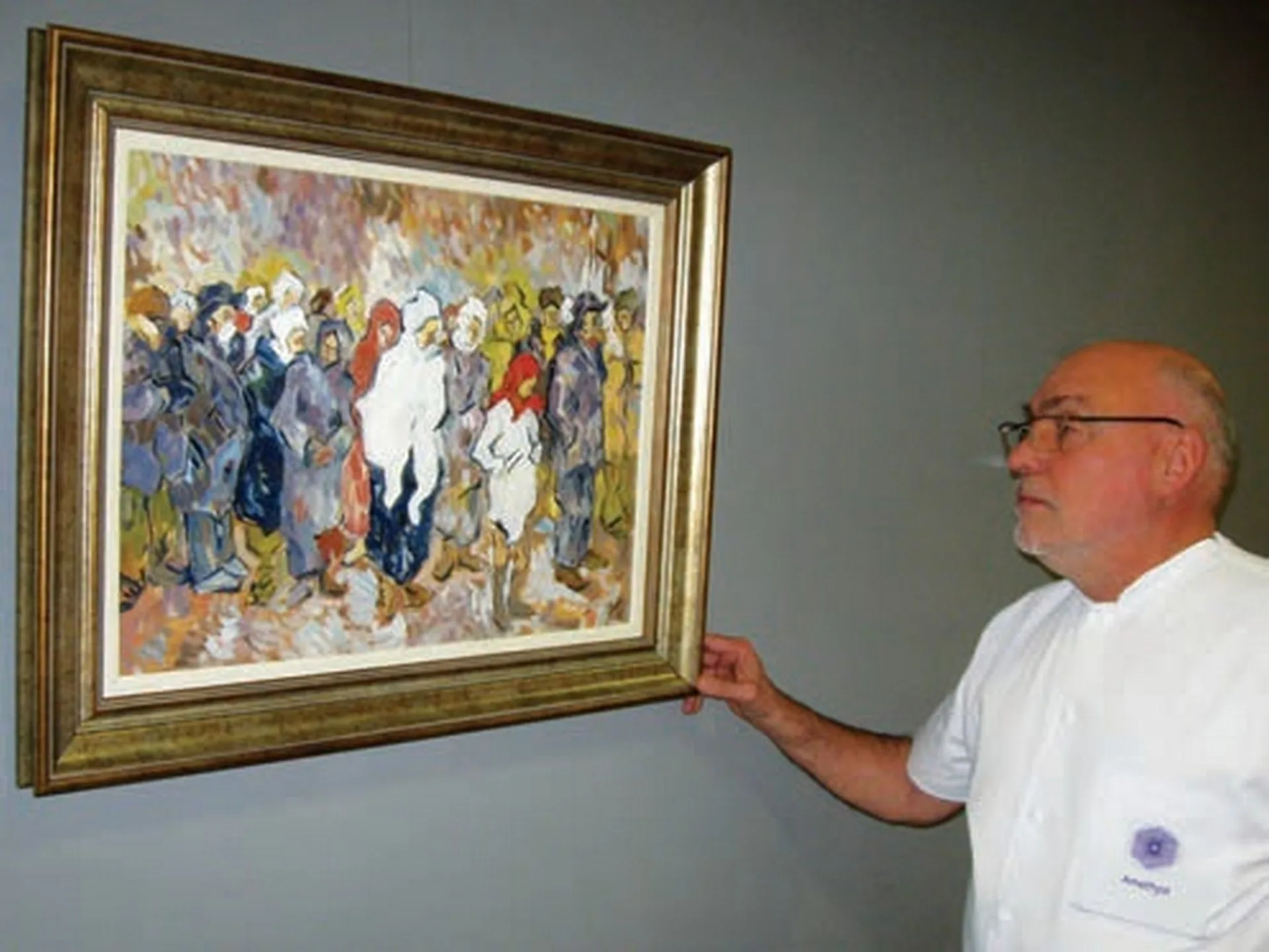
From the outside it looks like an industrial hall, yet you can hardly find a friendlier building than the Amethyst clinic which is located in Otopeni. Comfortable couches, a fresh juices vendor, large screen television sets – all make the place look like the lobby of a business center. On the walls there are hanging some good copies of Nicolae Tonitza’s paintings. There is a certain “tension” on the faces of people who seem like they are waiting for a redemptory verdict, however the place doesn’t look like a hospital. It is even rarer to ever find a discussion partner that is as good-natured as Ion-Christian Chiricuță, the founder of the clinic. It took only one phone call to setup a meeting with this man who describes himself, without any false modesty: “I don’t belong to myself, I take care only of other people’s problems. In Germany I was working 14 hours per day and I remember, one time, I worked for 17 consecutive months without any vacation leave. I don’t feel sorry about this because I take pleasure in my work.”
“What’s so enjoyable in spending time with very sick people? They need help and the fact that I am able to help them and that I see the result of this help makes me very content”, explains the 69 years old doctor. He received understanding from his wife and daughter who both remained in Germany. Since 2010, they only see each other every 5-7 months because he came back to live in Romania.
How to build a successful clinic: from the first brick to the first healing
“Why did I come back? To take care of my mother who speaks four foreign languages and will soon turn 95 years old. And in these circumstances, the French investors from the Amethyst clinic asked me if we can create a viable concept in Romania. Usually, the investors buy the equipments and after that they look for a team. In this case, it was the other way around.” Dr. Chiricuță selected his staff, prepared them for about a year, and afterwards they decided together what equipment to purchase. He wanted to make use of the things he had learnt in Germany in his native country as well. From the first brick to the first radio treatment it took another nine months: “During the construction we continued to form our team and we gained time, like an orchestra who first practiced in a tent and then played the concert in a real hall that has the right parameters of concert hall; because you cannot play quality music in a sports hall.” The German experience had its saying, because “in Germany, without having things organized beforehand and a clear concept, nobody will begin working on a dream.” The Amethyst clinic cares for about a thousand patients each year, but Chiricuță would wish for more wanted more than can encounter some other ideas and attitudes, but he should not remain there. I went there, but I also came back. Our parents also left the country, Cantucuzino and Babeș for example. Romanian medicine is alive thanks to those doctors who left, but came back and they setup schools here.”
Unfortunately, the saying about nobody being a prophet in your own country is also true in the case of Chiricuță: “I wrote books, but nobody reads them in Romania, no doctor or physicist came to me to ask for any of my books. I went in Moscow and the Russians were crazy about my work. They wanted to learn Romanian only so they could be able to read
my books.”
The fight against impossible – creating a Romanian radiotherapy school
As a PhD in physics and medicine and having the experience of setting up a radiotherapy clinic in Germany, Ion-Christian Chiricuță wanted to share his knowledge to a new generation of professionals, within a national center, “but a young man doesn’t find such a center in Romania, so that he could become a radiotherapist in five years.” For three years now, he has been teaching at the Medical Biophysics and Cellular Biotechnology Masters within the University of Medicine and Pharmacy “Carol Davila” in Bucharest. He is disappointed because only three of his students completed the graduation examination.
And there will a fourth student soon. The teacher doesn’t blame his disciples for the failure… “Who is paying for the education of these young people: nurses, physicists and doctors in training? The preparation of all this entire staff is done so they can make use of the high tech devices, based on radiotherapy’s most modern concepts. The price of such a centre is 200.000 euro, and this money comes from the taxes paid by the students.”
“In Romania, radiotherapy is an ongoing development field and it is the cheapest and most efficient oncology treatment, after surgery,” noticed the doctor at his coming back in his country of origin. We keep talking about state of the art technology, but we ignore the fact that it is not technology in itself that makes the difference with regards to the quality of the treatment, but it is the team that is using the technology. “Otherwise, we buy a device, but we use it with the mind we had 10-20 years ago; it is like buying a racing bicycle, but we ride it on a countryside road, so it breaks down after three uses although it was a state of the art bicycle…” Romania has more money than ever, but it is investing it in the wrong technology. “In Romania we need another 90 accelerators. For each device we need four technicians, two physicists and three doctors, so in total we need 600-1,000 professionals. Where will you train these people? Who is going to teach them?,” asks the radiotherapist. And he goes on: “At Botoșani we will have the latest available technology. But who will go to work there after receiving offers also from Bucharest or from another university center? Maybe some young doctor will go. But will he be able to gather a team around him: two physicists, and 2-3 doctors more? And there is another consideration to take into account – if we purchase a device that is only going to treat 500 patients per year, then that device is not worth the investment.”
The costs of modern medicine
Ion-Christian Chiricuță strongly believes that “medicine shouldn’t be a business”, but he explains that modern therapies have pretty high costs. Here is a convincing example: “Steve Jobs paid the hospital that took care of him exclusively. Each time he was hospitalized, he would paid one million dollars. As a proof, he went on living for five years. Some other people, without having this money, wouldn’t not have lived that long. It is very bad t be sick and not to have money, so this is why we created a health insurance system. Today, nobody is able to pay for their own health care with the money he earned while working.”
Medicine is no longer a goodwill gesture, but it has a value that is given by quality, accuracy and results. And to get to all these, there are clear procedures: a diagnostic is given, a scale of the healing possibilities is established and, depending on the stage of the disease (advanced, intermediary, and incipient), a certain treatment is applied. “If a patient has a very advanced disease and he offers me 15 million euro, I am not able to cure him, I cannot lie to him or make up a story”, says the radiotherapist. If a man stands chances to be cured, we need to take advantage of it, “but there are some costs: a hospital can perform a procedure for a certain price; another hospital can offer it cheaper; and ultimately, some other hospital may decide to stop performing the procedure because it is too infrequent, therefore inefficiently expensive.”
Radiotherapy is like a chain formed of several phases and procedures, each having its own costs. When the patient comes to the hospital, he brings in a folder full of laboratory test reports and medical papers. Someone takes him over; they make him a file that must be written in a certain format. Sometimes, the making up of this file takes about an hour. “But who is paying for that hour?” asks the doctor. The Health Insurance Fund believes they shouldn’t be the ones to pay. Yet, without this standard file, the oncology commission cannot meet,so that it that would prescribe the adequate treatment. The meeting of the commission is up to two hours long, but this time is also not paid by the Health Insurance Fund. Afterwards, an irradiation plan needs to be done; it contains the areas that need to be irradiated, and a physicist calculates a first plan. Then another plan, and another, until the doctor agrees and chooses the best plan for the patient. Then, comes the daily irradiation procedure – this is the only phase that the Health Insurances Fund is paying for. So, this is why the patient must pay from their own pocket a part of the treatment cost – up to approximately 5-5.500 lei. Something that is different in Germany is the fact that all the radiotherapy clinics are checked each year by an “audit” commission, and if they do comply with the enforced quality standards, they risk having their place closed. This audit is not carried out in Romania. Only 30% of the patients that need a radiologic treatment are able to obtain it within the necessary timeframe. The actual period of time between the commencement of the treatment and the moment when the patient came in for the first time can be of several weeks. There are too few radiotherapy devices out there. And there are only 50 radiotherapists all over the country and some others, that are in currently in training are too few. So, giving the circumstances, people lose their faith in this form of therapy and they end up – those who can afford it – in hospitals in Austria or Turkey. Having a very high demand, these hospitals are much overpriced.
A doctor passioned about art
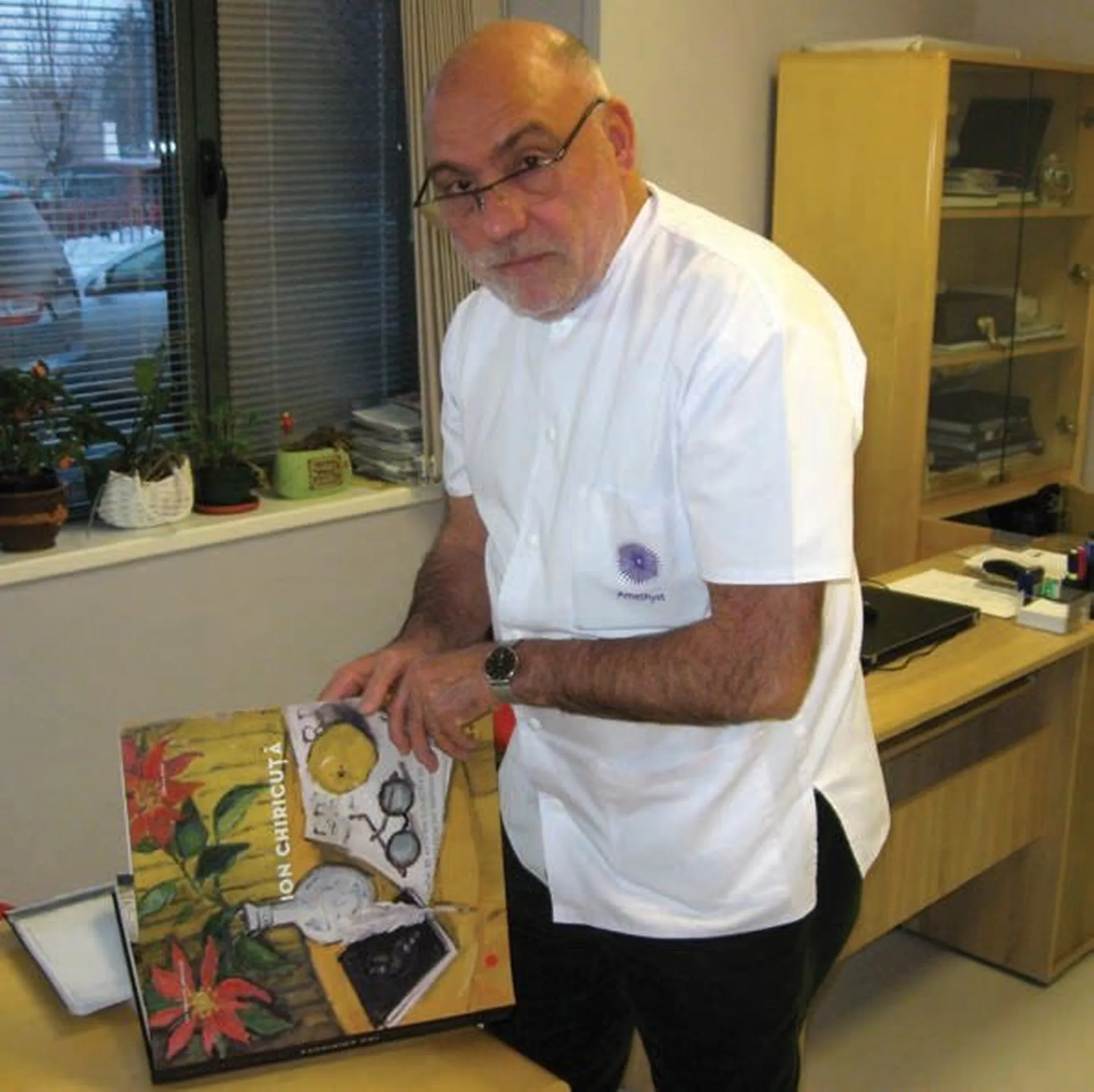
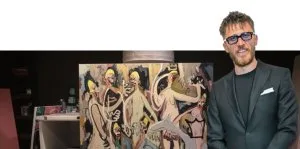
“My father treated cancer with the scalpel; I am treating it using radiations,” says the son of Ion Chiricuță, the surgeon whose name is on the Oncology Institute in Cluj-Napoca. Together with the desire of serving his fellow men, the son Ion-Christian has inherited one more thing from his family: the passion for art. Whenever he has a spare moment, he goes and visits museums; he takes part at auctions and he surrounds himself with people who share the same hobbies related to painting and classic music. „The Ion Chiricuță Collection” is made of almost a thousand paintings and it was donated at the beginning of the `80s to the „Vasile Pârvan” Museum in Bârlad (the native cityof the surgeon) by the collector himself. The entire family agreed with the donation, so Ion-Christian and his brother woundn’t want to change their father’s will. However, the doctor has one big discontent. “For 35 years, no painting has been restored. In 40 years from now the frames will be emptied.”
The doctor’s stories about art are as captivating as the ones related to his job: “I was at and action of the Macovescu’s, the family of the former minister of Foreign Affairs during the Ceaușescu regime. A Țuculescu painting was sold for 47.000 euro. My father bought a Țuculescu in 1962. It was expensive even back then, but he paid 2.700 lei for it. The Macovescu family made a wholesale of the entire collection. Everything that Mr. Macovesscu collected in a lifetime was shattered during a three hours auction. The history of collections is very tough; very often the inheritors scatter them.”
Why does the medic think many collections have such a sad fate? “Today’s collector is not like the one in the old days. Now, there are people who make dirty money and place a part of their fortune in art, and so they become collectors. This is a tough truth. Who do you see at the auctions? Today’s millionaires or their middlemen, people who never worked a day in their lives and who suddenly become art lovers…” “I don’t want to be mean, but nowadays it is impossible to be a collector… My father used to buy a painting for one thousand lei during the war and now it is worth 180,000 euro. You must seize the moment. Ifa famine occurs now, that 180,000 euro painting will cost three loaves of bread. This is how it has always been and history keeps repeating itself. All the works of art that get away undestroyed during wars, end up to be sold for nothing.”
A tough critic of our times, but with a heart full of love for people
The moment you start discussing with Ion-Christian Chiricuță, you can feel that he offers himself to you when he talks. All the stories he tells are accompanied by a drawing of his ideas or he shows you something (paintings, books, YouTube links). However, many of the things that he speaks about are hurting him. For example, despite of the accomplishments he had at the Amethyst Clinic, he sadly observes that “the situation of the Romanian patient and of the simple man who lives in this country is dramatic. Really, there is no hospital bed where you can die with dignity, where you are cared for according to some standards. You stand at the good will of some nurses, of some medical assistant, of some doctor and these people are so overwhelmed by their tasks that they cannot handle it anymore. They are humans, but they cannot make up for the flaws of the system, so they cannot apply their humanity where they are supposed to do it.” The high rate of analphabetism, the false models that are promoted by the media, the lack of efficient social policies for the vulnerable categories, the uncleanness or even the fact that (something unconceivable in Germany!) three members of his family and even himself were bitten by stray dogs – all of these affect Dr. Chiricuță who carries a daily fight to save his patients from suffering.Above everything else, you can quickly realize that the gap between his generation and the young people hurts him deeply; he confesses that he doesn’t understand the latter. In the same time, he speaks highly of forerunners: “the people before us were fantastic, they created and they left us a solid foundation.” “If I could have my father’s life standard, who would turn 100 years old in 2018, I would be a very happy man. He lived for medicine through art. And all the work he did was for the good of people. Likewise there is my mentor, Professor Werner Bohndorf from Würzburg, who will soon turn 90 years. In his free time, my professor paints and «copies» Modigliani paintings.” It would be deeply unjust that an article about such a lively man as Ion- Christian Chiricuță ended on a pessimistic note. His words dissect just like a scalpel in the reality of contemporary Romania, but he continues to think that “it is worth believing and confiding in people, accepting that we must learn all the time. The patient is also our teacher. We see the way he perceives our therapy and therefore we improve it, we reduce the secondary effects, we behave in a different manner. He is educating us in our job.” And if we were to reduce the entire discussion with Dr. Chiricuță to only one phrase, it would be worth mentioning the following words that he spoke while looking at Baby Jesus from a painting reproduced, part of a photo album containing works of the „Ion Chiricuță Collection”: „The child is what we all ought to be, always curious to find out the truth.”